
How can I help my school-age child brush their back teeth?
Keep helping with brushing, even when your child wants to do it on their own. The Australian Dental Association recommends that parents help children brush and floss until around 8 or 9 years old, when they can hold and control a toothbrush and floss better. At school age, the teeth right at the back need attention too, because the first adult molars come through behind the baby teeth. See the ADA's guide to dental care for kids.
At Glo Dental, our infants and children's dental care page encourages parents to supervise once children start brushing for themselves, and explains that we can teach brushing techniques. This guide focuses on the back teeth: why they are easy to miss and what to ask at your child's visit in Cockburn Central or Beeliar.
Why are there new teeth behind the baby teeth?
Around the age of 6, a child's first adult teeth start to push into the mouth, including the four first adult molars. The ADA explains that these molars come in behind the baby teeth, so no baby teeth need to fall out to make room for them. Timing varies between children, so age alone won't tell you exactly which teeth are there. Read the ADA's explanation of adult teeth.
If you're not sure which back teeth are new, ask the dentist to point them out. The ADA says a child's dental check includes making sure there is no tooth decay and checking how the teeth and jaw are growing, including whether teeth are appearing at the right time.
What brushing routine should we use?
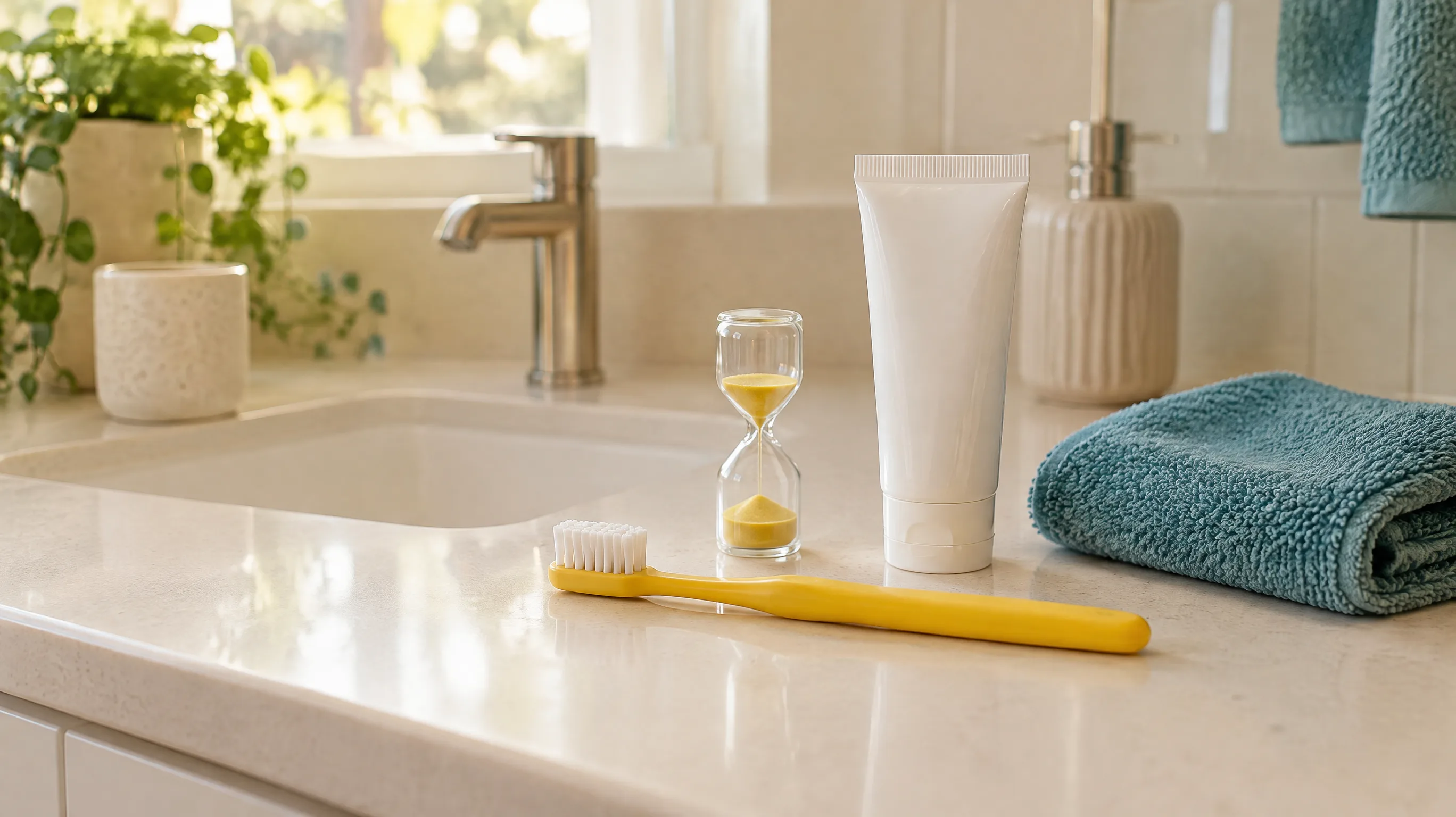
The ADA recommends brushing twice a day for two minutes each time, once in the morning and again at night. One way to split up the time is to brush each corner of the mouth for 30 seconds. A sand timer, a phone timer or a song can help you keep track. See the ADA's brushing guidance.
The ADA lists a soft-bristled toothbrush and fluoride toothpaste as the basic tools. It also advises not pressing too hard, because that wears the bristles out faster and spread bristles don't clean as well. It's best not to eat or drink after brushing before bed. Ask the dentist which toothpaste suits your child's age and how to angle the brush to reach the molars at the back.
Does starting school mean they can brush alone?
Not yet. The ADA links the 8 or 9 year guide to physical skills such as holding and controlling the brush, and suggests a handy marker: when your child starts using a pen at school instead of a pencil. Read the ADA's advice on helping children brush. Glo's children's page also suggests supervising after your child starts brushing on their own.
At the appointment, you might ask: "Can you show us how to brush the teeth right at the back?" or "Which parts does my child still need help with?" Our team can teach brushing techniques, so a quick demonstration can make the advice specific to your child. Read about children's visits at Glo.
Is brushing enough between the back teeth?
Not for the spaces where teeth touch. The ADA recommends flossing for children once they have at least 2 teeth touching side by side. Some children have larger spaces between their teeth, so flossing may not be needed between every tooth. The dentist can show you and your child techniques and items that make flossing easier, and you'll need to help until your child has the skills to floss alone. See the ADA's flossing advice for children.
What should we ask at a children's dental visit?
Ask which adult teeth have come through, whether the back teeth are being cleaned well and what help your child needs at home. How often your child needs a check depends on their needs, so ask the dentist rather than relying on a fixed schedule.
You can book a children's dental appointment at Glo Dental and mention that you'd like help with brushing the back teeth. If your child hasn't been before, our guide to preparing your child for their first dental visit covers getting ready for the appointment, and our article on talking to the dentist about thumb sucking or dummy use covers another common question. You can also meet Rhea Nihalani, Glo's founder and dentist.
Sources and scope
Sources checked on 16 November 2026. General information for parents and carers, not an individual diagnosis or treatment plan. Your child's dentist can advise on their own needs.
- Australian Dental Association — Dental care for kids: adult molars, helping with brushing and flossing, and what a child's check looks at.
- Australian Dental Association — Brushing teeth: twice-daily two-minute brushing, tools and pressure.
- Glo Dental — Infants and children's dental care: supervision, brushing techniques and practice locations.
- Glo Dental — Rhea Nihalani's profile: author identity and role.